Urban trees of the future: Which species can withstand climate change?
Cities are getting hotter—and increasingly, they depend on trees to provide vital cooling. But which tree species are resilient enough to withstand rising temperatures?
To help ensure that urban areas remain green and livable in the future, we are studying 124 urban trees in Freiburg and Karlsruhe, located in parks and along streets. These include well-known species such as small-leaved lime, London plane, Norway maple, and English oak—all of which are already common in urban settings and recognized for their drought resistance.
Using dendroecological analyses, we examine how well these trees cope with climate-related stress. This includes studying tree ring widths and wood anatomy, which reveal how trees respond to environmental conditions like heat and drought over time.
How stressed are our urban trees?
Beyond growth patterns, our research also focuses on the stress levels of the trees. With advanced molecular and physiological methods, we assess hormone levels, identify stress markers, and analyze how past drought events have left their mark. These insights help us understand which species are best suited for future urban landscapes.
With this knowledge, cities will be better equipped to plant climate-resilient trees—ensuring more shade, cleaner air, and a more comfortable urban climate for all.
This sub-project is being carried out by the Chair of Forest Growth and Dendroecology at the University of Freiburg and the the Institute of Meteorology and Climate Research – Atmospheric Environmental Research (IMK-IFU). The Joseph Gottlieb Kölreuter Institute of Plant Sciences (JKIP) at KIT is responsible for the molecular and physiological studies.
Results – Part 1
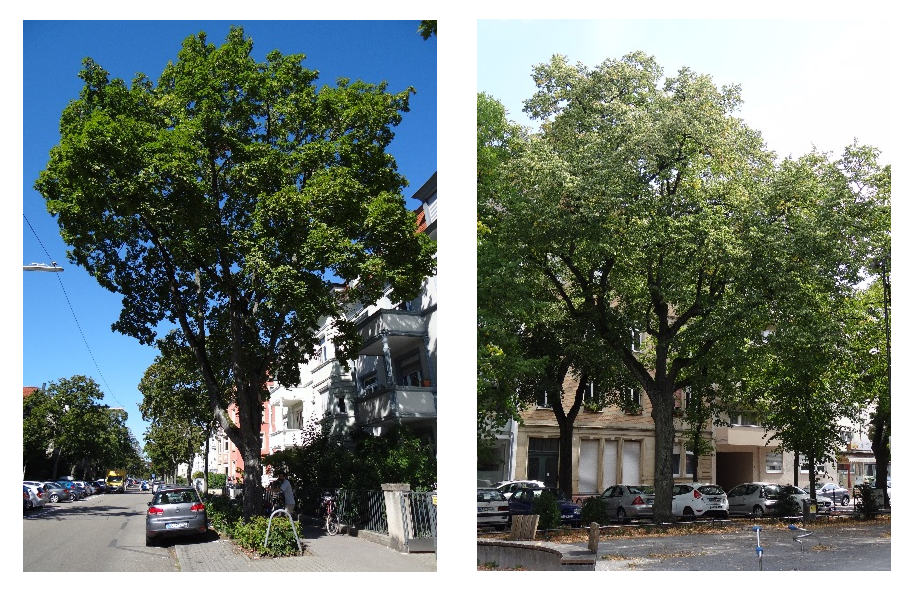
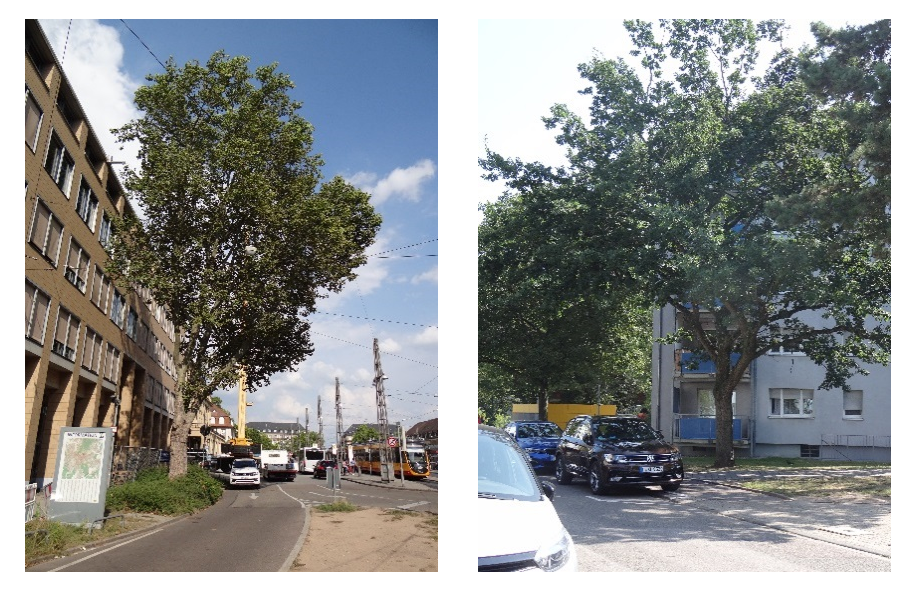
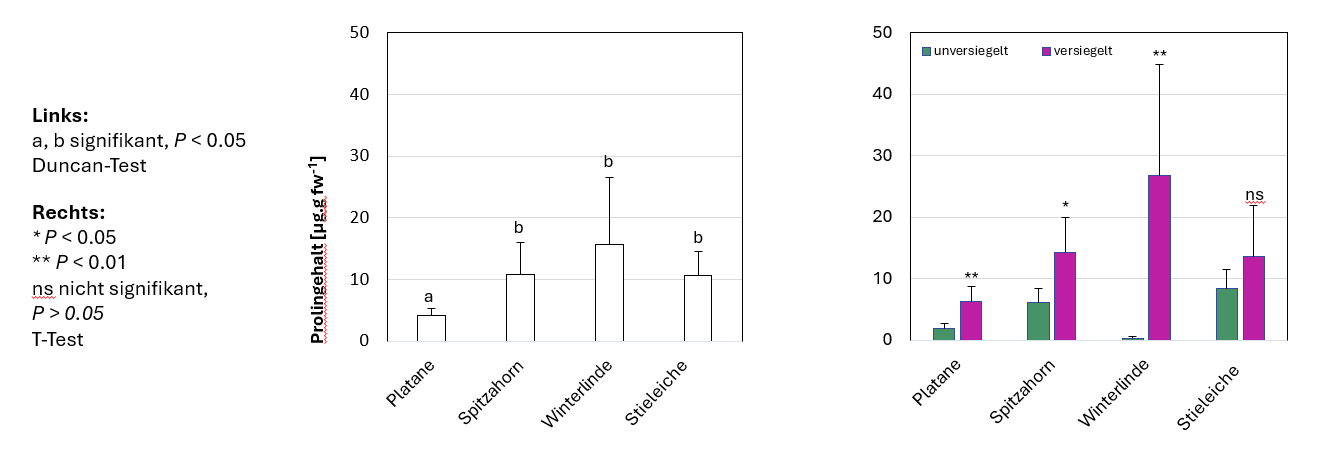
Stress markers in the leaves were measured for four tree species (London plane, Norway maple, small-leaved lime, and English oak) on KIT’s South Campus. A total of 16 trees from each species—half located on sealed sites and half on open sites—were studied during the two growing seasons of 2025 and 2026. The partners in Freiburg used dendrochronology to measure annual growth.
Across all tree species, proline accumulation in the leaves indicated that stress levels were significantly higher at sealed sites. Regardless of location, London plane trees exhibited the lowest stress levels, small-leaved linden trees the highest, with Norway maple and English oak falling in between. High proline levels were generally associated with low growth; this correlation was most evident in London plane trees.
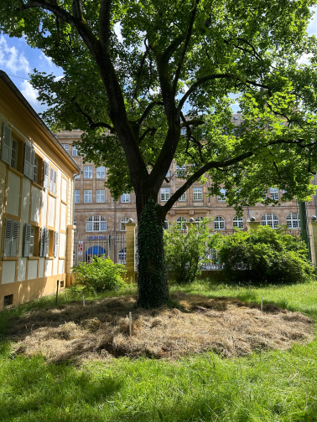
In collaboration with KIT Facility Management and the maintenance company Merkle, the research findings are currently being integrated into tree care practices under scientific supervision. To this end, grass clippings from KIT areas that have been developed as wild meadows—and are therefore being left to grow naturally—are being applied as mulch under selected trees to investigate the impact on stress levels. It is hypothesized that improved soil moisture and stimulation of the microbiome may contribute to greater tree resilience. Soil probes developed by IMTEK Freiburg are also being integrated into this “real-world laboratory,” enabling real-time monitoring of the environmental conditions critical to the trees’ well-being.
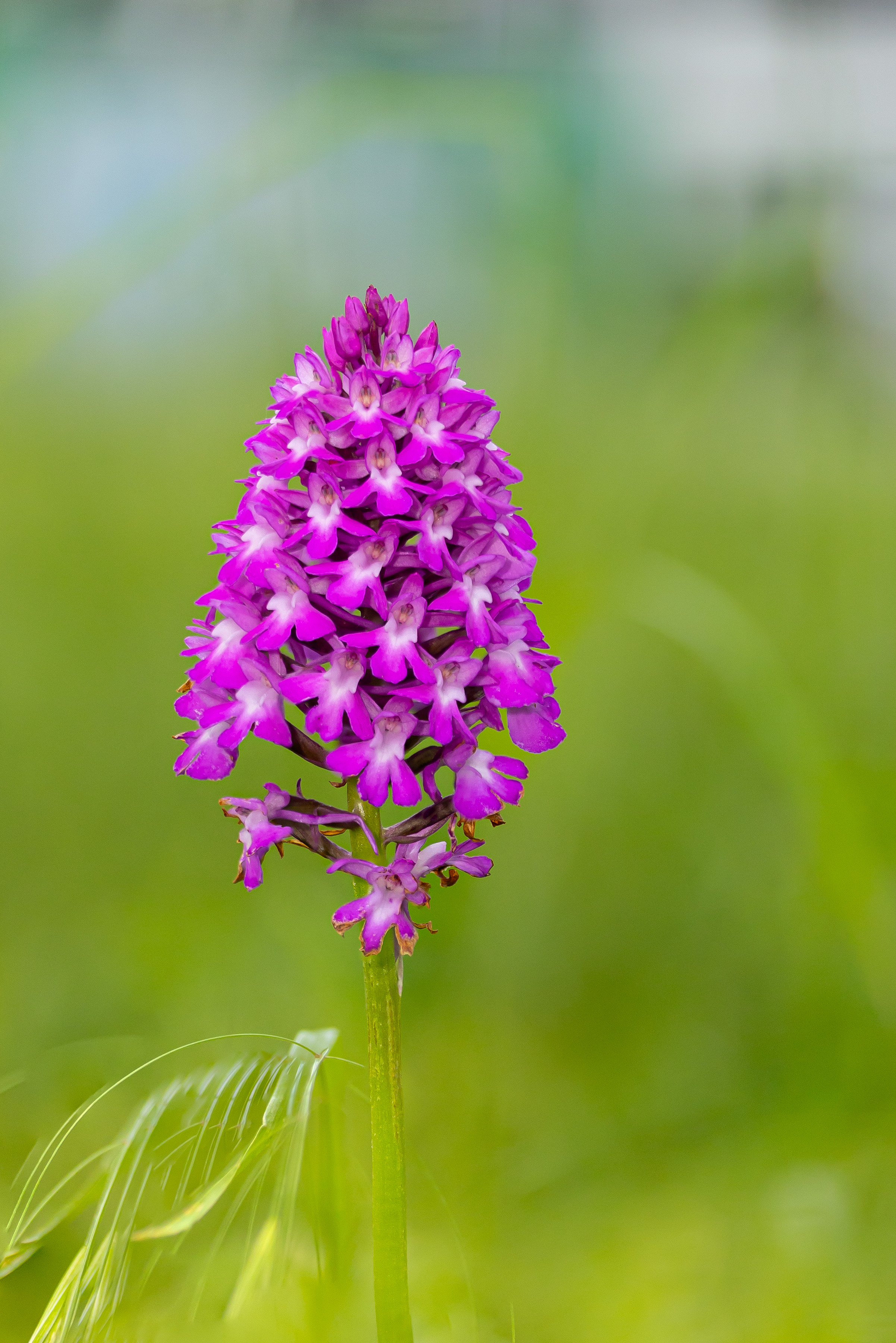
For the past two years, the rare orchid Anacamptis pyramidalis has been appearing repeatedly in the wild meadows near the Audimax. As part of a “real-world laboratory” experiment, grass clippings from trees selected for thinning are currently being applied as mulch, and the effect on the trees’ stress levels is being studied.
More Pictures
Results – Part 2
To determine which tree species will persist in the urban landscape over the long term, Norway maple (Acer platanoides), London plane (Platanus x acerifolia), English oak (Quercus robur), and small-leaved lime (Tilia cordata) were studied using dendroecological methods. To this end, core samples were taken from selected trees and later prepared in the laboratory to measure the width of the growth rings and subsequently examine the wood anatomy.
In selecting the trees, not only was tree species taken into account, but a distinction was also made between street and park locations, with the question of whether the presence or absence of green space beneath the tree influences the trees’ growth patterns.
However, no such effect could be demonstrated with regard to annual ring width in relation to summer drought. Summer drought during the months of June, July, and August did not have a significantly different effect on the annual ring width of the trees, whether they were located along streets with little to no open green space beneath the canopy or in parks with ample green space beneath the canopy.
When analyzing by tree species, a significant influence of summer drought in June, July, and August on annual ring width was demonstrated only for English oaks and London plane trees.
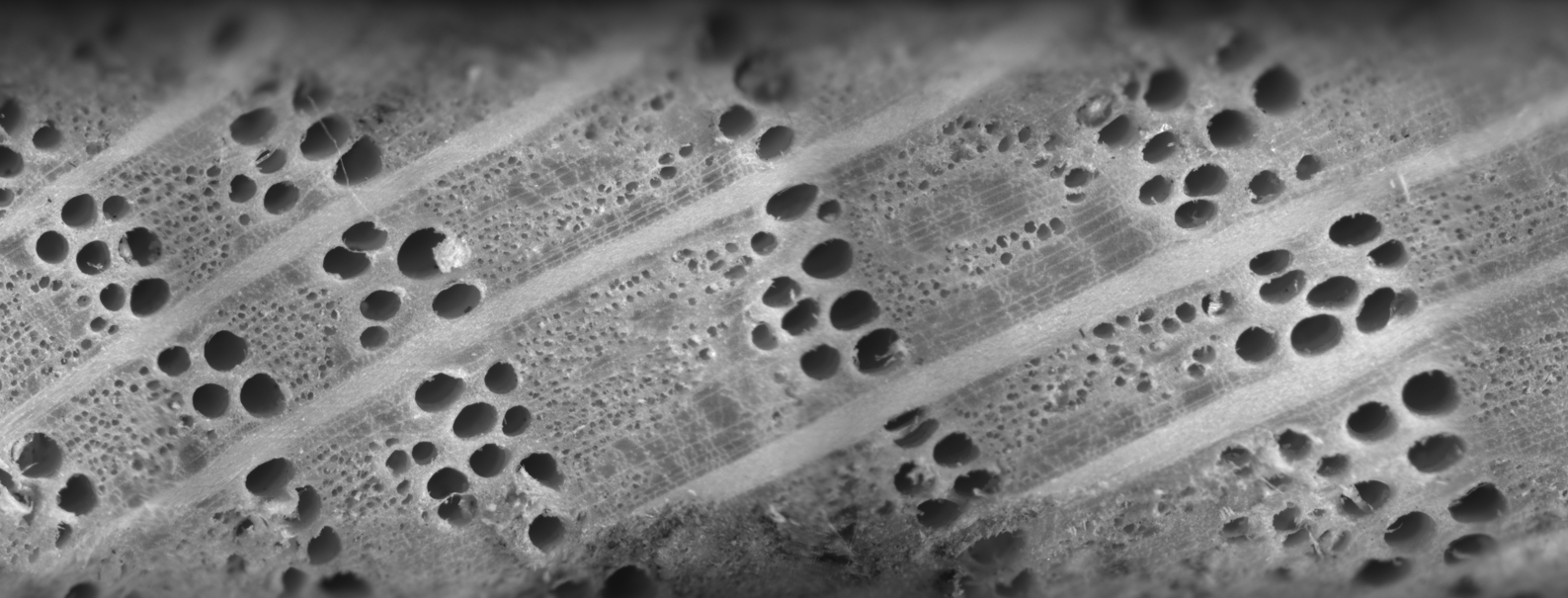
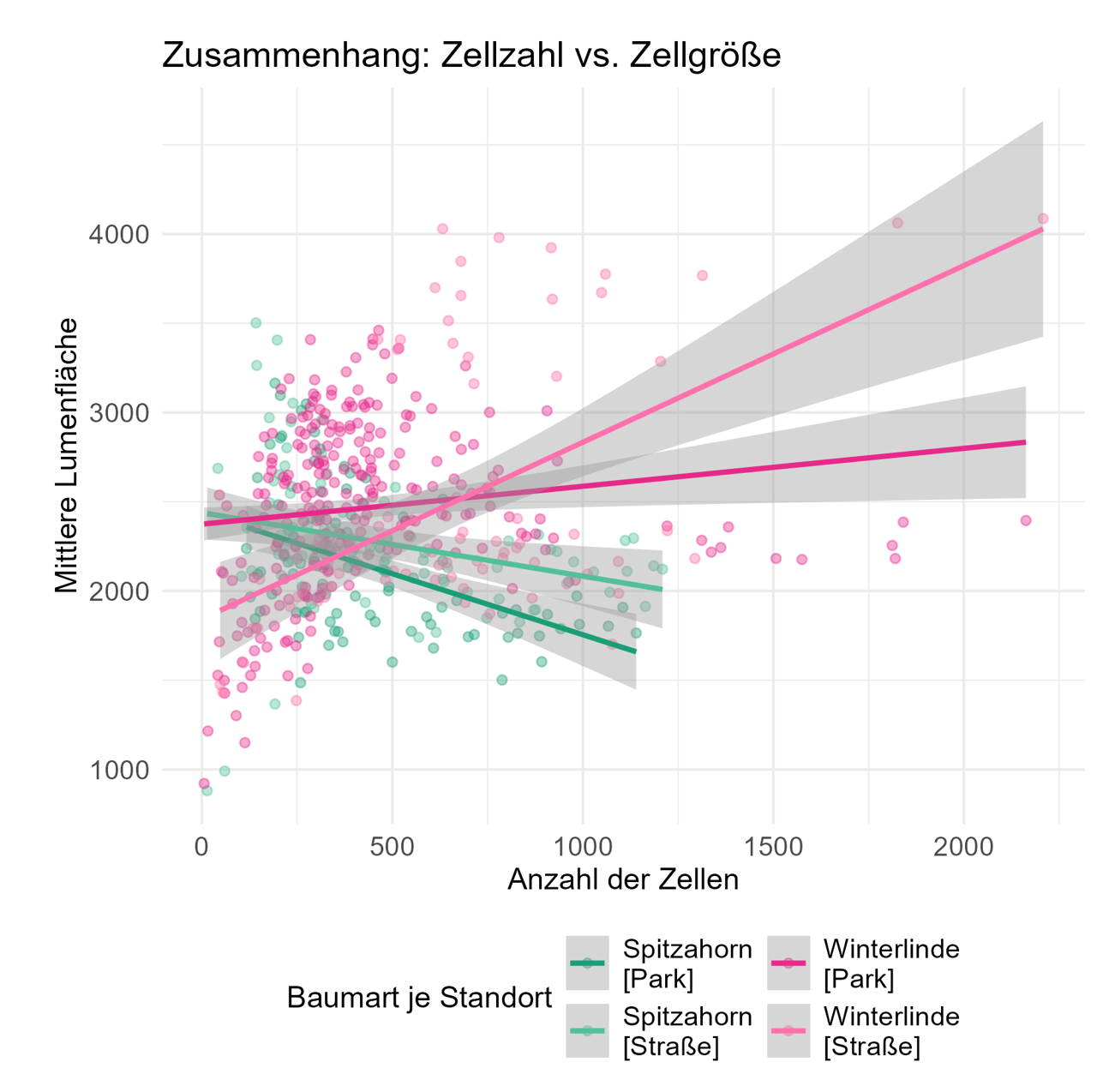
For the wood anatomical analyses, the focus was on cell count and lumen area. The different strategies of the common linden and Norway maple tree species became apparent. While the common linden increases its lumen area as the number of cells increases, the Norway maple reduces its lumen area as the number of cells increases. No significant effect of summer drought on lumen area could be demonstrated. A significant effect of summer drought was detected only on the cell count in small-leaved linden at roadside sites.
In conclusion, it can be stated that summer drought is only one of many factors influencing annual ring width. At the wood anatomical level, small-leaved linden and Norway maple employ different strategies to respond to environmental influences.