In conversation for a Green city: Cultural Significance of Urban Trees
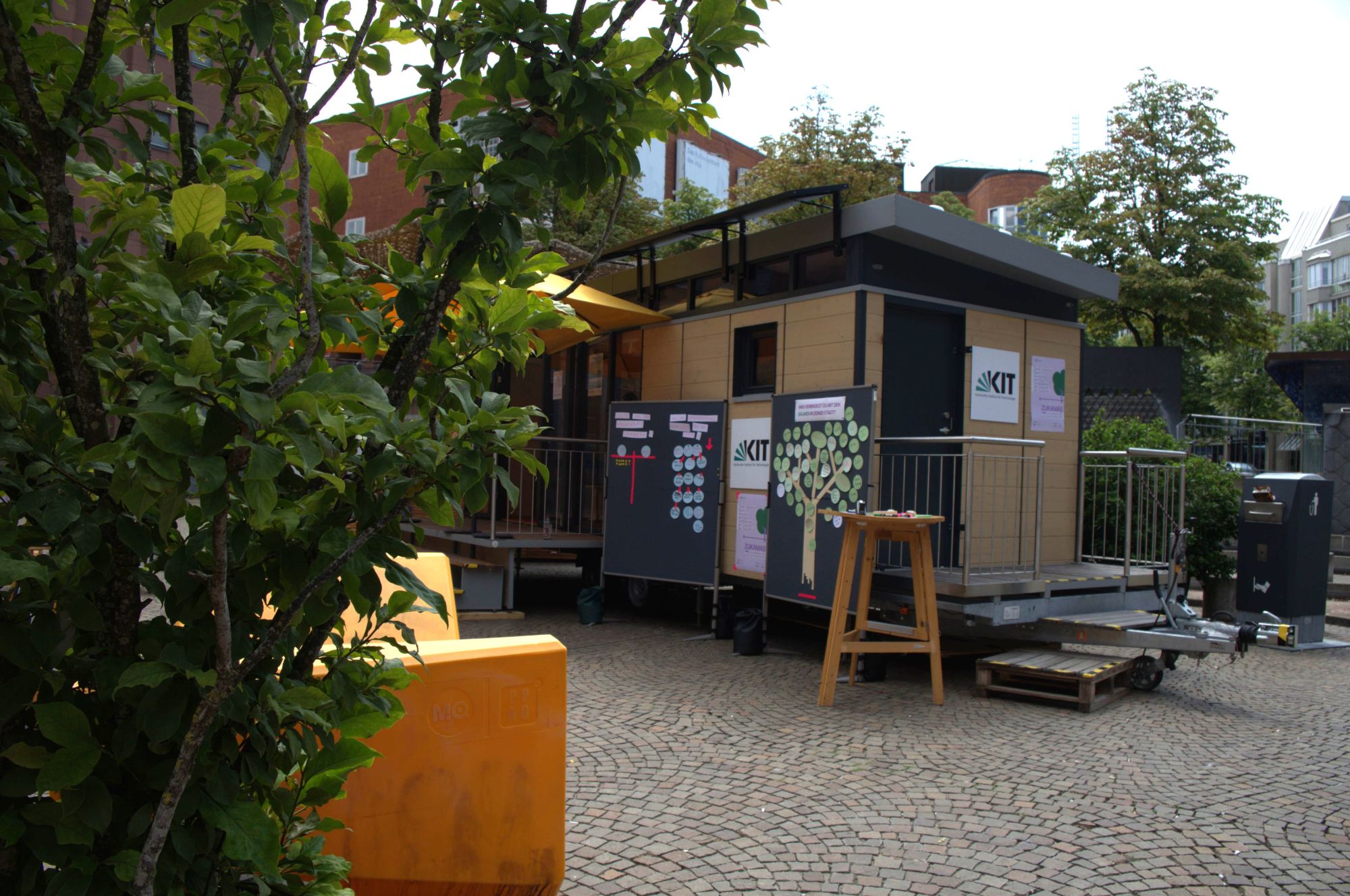
We consider it essential to share knowledge about urban trees and to work closely with stakeholders beyond the scientific community. To engage the urban population and initiate dialogue with local residents, we use the Mobile Participation Lab “MobiLab” from the KIT Center Humans and Technology. In addition, we investigate the cultural ecosystem services of urban trees, such as aesthetic value, recreation and a sense of place, using surveys and Cognitive Affective Mapping (CAM). CAMs are visual representations of thoughts and emotions related to a specific topic. This method helps to systematically analyze complex opinions and emotional responses.
At the end of the project, we will hold a workshop with representatives of the city administration, during which we will present and discuss the project results. The aim is to incorporate these findings into future urban planning processes, thereby promoting the sustainable development of our cities. This sub-project is a collaboration between the Institute for Technology Assessment and Systems Analysis (ITAS) and the Department of General Psychology at the University of Freiburg’s Institute of Psychology.
Results
This subproject examined the cultural values that urban trees hold for people and how these values can be more fully integrated into the planning and design of urban green spaces. In addition to the scientific survey, the project focused on direct dialogue with the public.
A key component was two three-day MobiLab campaigns held in July 2025 in Freiburg and Karlsruhe. Under the motto “In Conversation for a Green City,” the Mobile Participation Lab of the KIT Center for Human and Technology invited citizens to engage in conversation about urban trees, urban green spaces, and climate adaptation. The events took place at the Old Synagogue Square in Freiburg and at Kronenplatz in Karlsruhe, reaching people of various age groups. In addition, the ZUKAMAS project was represented at the Waldstadtfest in Karlsruhe and at Science Week with informational and hands-on activities.
You can find more impressions and background information on the “Review: Mobi-Lab Campaigns” page.
Survey: Perceptions of the Cultural Ecosystem Services Provided by Urban Trees
At the same time, a survey was conducted on the cultural ecosystem services provided by urban trees. The study examined how city residents in Karlsruhe and Freiburg perceive the cultural ecosystem services provided by trees and whether certain tree species are associated with different cultural values. These include, for example, aesthetic values, recreation, social interaction, and a sense of home.
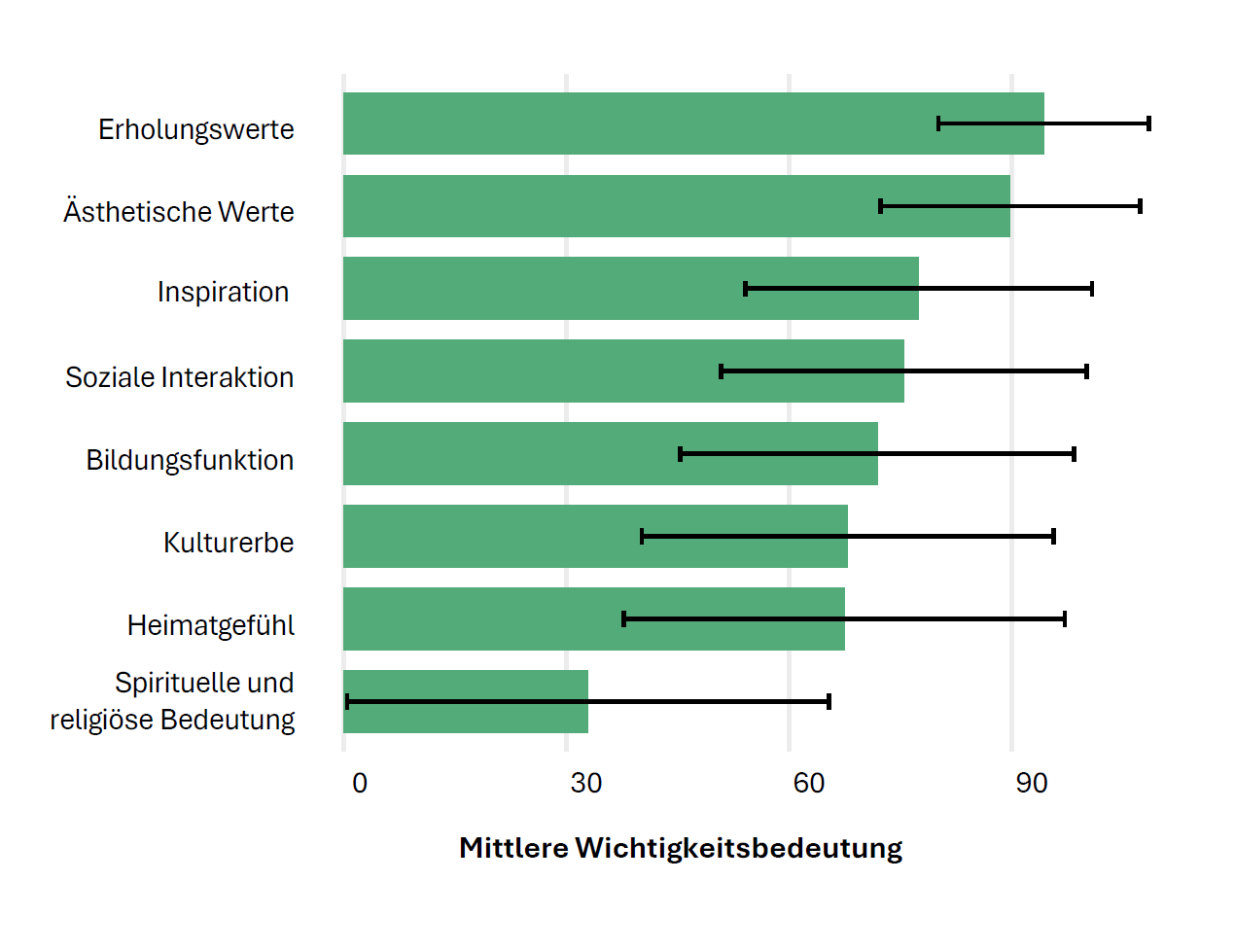
A total of 273 people participated, primarily from Freiburg and the surrounding area. Using various photos, they evaluated four tree species: linden, cherry, plane, and pine. The results show that most cultural values associated with urban trees are perceived as important or very important. Recreational and aesthetic values were rated particularly highly.
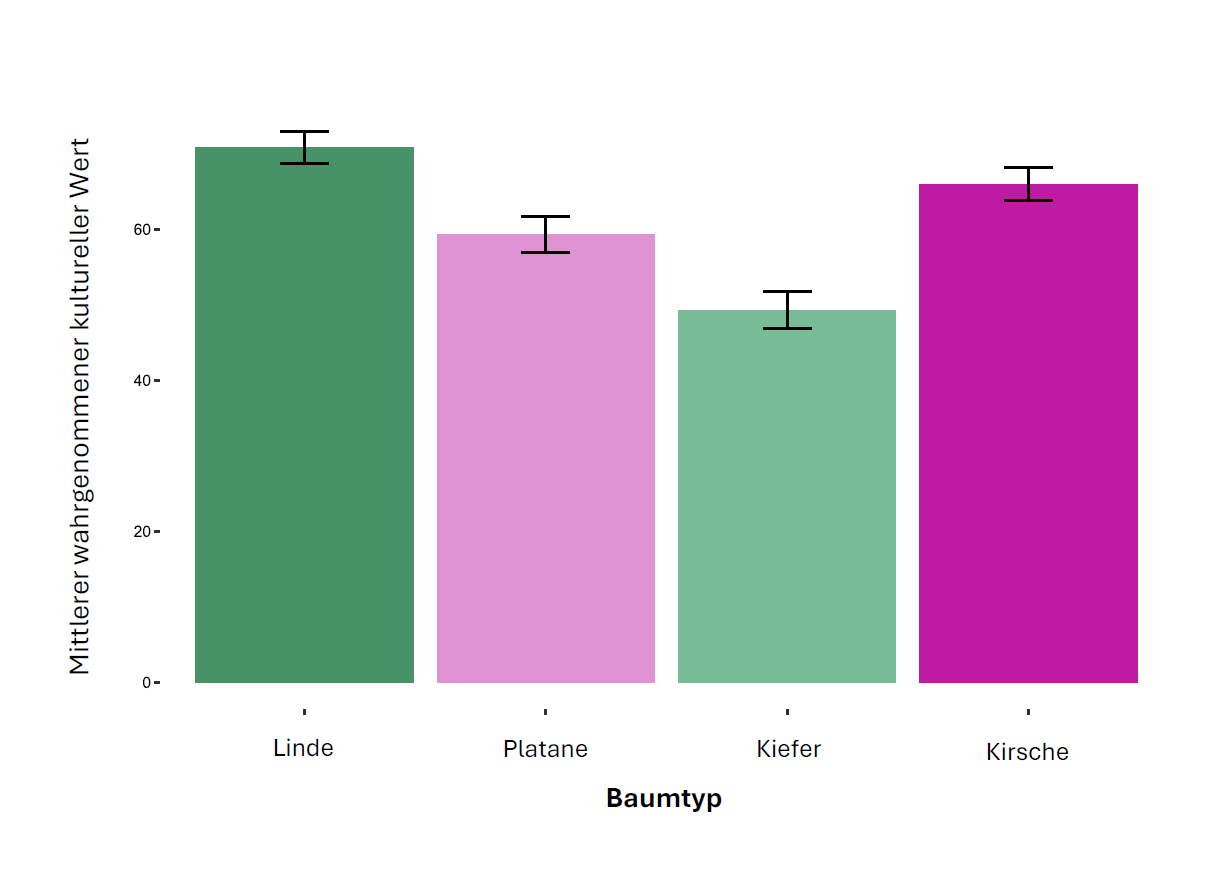
The survey results indicate that different tree species are perceived differently and associated with varying cultural meanings. The linden tree achieved the highest average cultural values, followed by the cherry tree. In the case of the linden tree, recreational, aesthetic, and social interactions were particularly emphasized. The results make it clear that urban trees not only contribute to the environment but also have significant social and cultural importance. Such perspectives can help practitioners more systematically incorporate cultural values into future decisions regarding the selection and placement of tree species—along with other criteria such as drought.
Bilder